LaGuardia Airport has changed more in the past several years than in the decades before them. The major redevelopment of the airport modernized Terminals B and C, and those two buildings now carry most of the newer facilities and amenities travelers notice first. If your only memory of LGA involves low ceilings and crowded gate areas, the current layout will feel like a different airport. What has not changed is the basic rule of a smooth trip: know which terminal your airline uses before you leave for the airport, then plan your meal and your waiting time around that building.
This guide sticks to what is verifiable about the terminal structure and offers practical advice for the parts that change often, including food vendors, seating, and airline assignments. For anything time sensitive, confirm with your airline or the airport’s official channels on the day you travel.
The Four Terminals at LaGuardia, Explained
LGA has four operating terminals labeled A through D. The two newest and most modern are Terminal B and Terminal C, both of which came out of the airport’s redevelopment program. Terminal A is the historic Marine Air Terminal, a building with a much longer history than the rest of the campus. Terminal D rounds out the four operating terminals.
| Terminal | What travelers should know |
|---|---|
| Terminal A | The historic Marine Air Terminal, one of four operating terminals at LGA. |
| Terminal B | One of the two newest and most modern terminals, rebuilt during the airport’s redevelopment. |
| Terminal C | Also among the newest and most modern, with the upgraded facilities that came with redevelopment. |
| Terminal D | One of the four operating terminals. Confirm current airline use and services with official sources. |
What the Redevelopment Actually Changed
The redevelopment of LaGuardia modernized Terminals B and C, and reporting on the project has focused on the improved facilities and amenities those buildings now offer. Coverage of Terminal B’s new interior dates to June 2020, when the rebuilt space was shown to the public. By 2022, comparisons between the two new terminals were treating both as genuine upgrades rather than incremental fixes, which tells you how far the airport moved in a short window.
For travelers, the practical effect is simple. The newer buildings are where you should expect the most comfortable waiting areas, the widest choice of food, and the layout that feels least like the old LaGuardia. Terminal A, by contrast, is valued for its history as much as its amenities.
Match Your Airline to Your Terminal First
LaGuardia primarily serves domestic flights, and its multiple terminals cater to different airlines. Airline assignments are the single most important detail to confirm before a trip, because arriving at the wrong building at a large airport can cost you more time than any security line. Airline terminal assignments can shift, and third party maps, including ones circulating on social media and image boards, are frequently out of date.
The reliable path is to check your airline’s own website or app, or the airport’s official terminal information, in the days before departure. Do not rely on a saved screenshot or a map graphic you found while searching. If you are connecting through LGA on a single ticket, your airline will also tell you whether you need to change terminals between flights.

Where to Eat Inside the Newer Terminals
Most of the dining improvement at LaGuardia sits inside the rebuilt Terminals B and C, where the redevelopment delivered upgraded facilities and amenities. Specific restaurants, food halls, and grab and go counters rotate over time, and new vendors open while others close, so any list of named spots ages quickly. The better approach is to check the airport’s official dining directory for your terminal once you know where you are flying from.
A few habits make eating at LGA less stressful:
- Look up your terminal’s options before you arrive, then note two or three backups in case your first choice is closed or packed.
- Eat before you reach the gate area if you have a tight connection, since the busiest counters tend to cluster where foot traffic is heaviest.
- Carry a refillable bottle if you plan to sit for a while, and confirm current rules on liquids with the airport or TSA before you pack.
- If you are traveling with kids or a group, decide on a meeting point inside the terminal before anyone splits off to order.
Travelers with dietary restrictions should treat the terminal directory as a starting point and confirm ingredients directly with the vendor. Airport menus change, and staff at the counter are the only reliable source on the day.
Where to Wait: Seating, Quiet, and Comfort
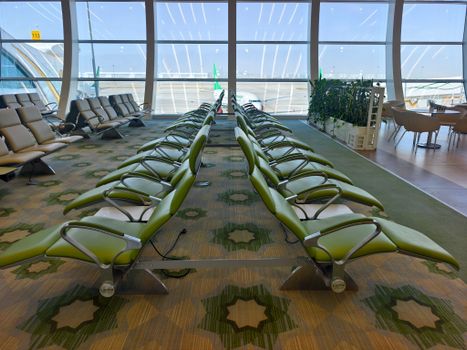
The rebuilt terminals are the safest bet for a comfortable wait, since Terminal B and Terminal C are the two newest and most modern buildings at LGA. That said, gate areas in any airport fill up in waves, and the quietest stretch is usually well before a bank of departures. If you arrive early, settle in away from the busiest gates first, then move closer as your boarding time approaches.
Charging outlets, seating styles, and quiet zones vary by concourse, and those details are exactly the kind of thing that changes without notice. Check the airport’s official terminal information for current amenities, or ask at an information desk once you are inside. For a long wait, a terminal with more food and seating options gives you more ways to break up the time, which is the practical argument for arriving into the newer buildings when your airline gives you the choice.
A Note on Terminal A and the Marine Air Terminal
Terminal A is the historic Marine Air Terminal, and it stands apart from the rest of the airport in both age and character. It is one of the four operating terminals, so some travelers will pass through it. Because it is not one of the two rebuilt terminals, do not assume it carries the same range of food and seating as Terminals B and C. If your flight departs from Terminal A, check the airport’s official directory for what is open in that building before you travel, and give yourself a little extra time for the unfamiliar layout.
Getting Between Terminals
Terminal connections at a large airport are a common source of confusion, and the answer depends on which buildings you are moving between and what transportation is running on the day. Rather than assume you can walk from one terminal to another, confirm the current guidance with the airport or your airline before you book a tight connection through LGA. If you are switching terminals on separate tickets, build in a generous buffer, because a misjudged transfer can turn a comfortable connection into a missed flight.
Timing Your Arrival Without Guessing
Security wait times at LaGuardia vary by terminal, day, and hour, so a single recommended arrival window is not reliable for every traveler. Your airline publishes check in and bag drop cutoffs, and those deadlines are the ones that matter most. Work backward from your boarding time, add the time you need for bag drop, security, and the walk to your gate, and you will land on a sensible arrival window without relying on a number someone posted online.
A Simple Plan for a Calm LaGuardia Day
- Confirm your terminal with your airline at least a day before departure, then check again the morning you fly.
- Look up dining and seating options in that specific terminal through the airport’s official directory.
- Decide whether you want to eat before security or after, based on how much time you have.
- Plan a meeting point inside the terminal if you are traveling with others.
- Leave buffer time for terminal changes if your itinerary involves more than one building.
The short version: the newer Terminals B and C are where LaGuardia’s upgraded facilities and amenities live, Terminal A carries the airport’s history as the Marine Air Terminal, and Terminal D completes the four operating terminals. Sort out your airline’s building first, then plan the meal and the wait around it, and the rest of the trip tends to take care of itself.
Frequently Asked Questions
Which LaGuardia terminal is the newest?
Terminals B and C are the two newest and most modern buildings at LaGuardia. Both were modernized through the airport’s major redevelopment, which brought improved facilities and amenities to travelers. If you want the most up to date experience in terms of dining and seating, those are the two terminals to look at, though you should still confirm your airline’s assignment first.
What terminal does JetBlue use at LaGuardia?
Airline terminal assignments can change, and this guide does not treat any single carrier’s location as fixed. Check JetBlue’s own website or app, or the airport’s official terminal information, shortly before your flight. Booking confirmations usually list the terminal as well, and the airline app updates fastest if a gate or terminal changes on the day of travel.
Can I walk between Terminal B and Terminal C?
Do not assume a walking route exists without checking. Terminal connections depend on the buildings involved and what transportation is running at the time. Confirm current guidance with the airport or your airline before booking a short connection through LGA, and if you are changing terminals on separate tickets, leave a generous buffer so a delay does not cost you the flight.
How early should I arrive at LaGuardia?
There is no single number that works for everyone, because security lines vary by terminal, day, and hour. Start with your airline’s published check in and bag drop cutoff, then add time for security and the walk to your gate. Traveling with checked bags, children, or a first visit to an unfamiliar terminal all argue for arriving earlier rather than later.
Is there an international terminal at LaGuardia?
LaGuardia primarily serves domestic flights, and the four operating terminals are labeled A through D. If your itinerary involves an international leg or a connection, confirm the details directly with your airline, since routings and terminal use can differ from what older guides describe. The airline’s own information is the reliable source before you book.